Hakan Çelik
Dynamic Class Creation
Dynamic Class Creation
The class keyword is merely syntactic sugar. Python transforms it behind the scenes into a type(name, bases, namespace) call. The following two definitions produce exactly the same class:
class Example:
	attr = 1

	def method(self):
		return "method"

name = "Example"
bases = ()
namespace = {
	"attr": 1,
	"method": lambda self: "method"
}

Example = type(name, bases, namespace)

print(f"{Example.__class__=}")     # <class 'type'>
print(f"{Example().attr=}")        # 1
print(f"{Example().method()=}")    # 'method'
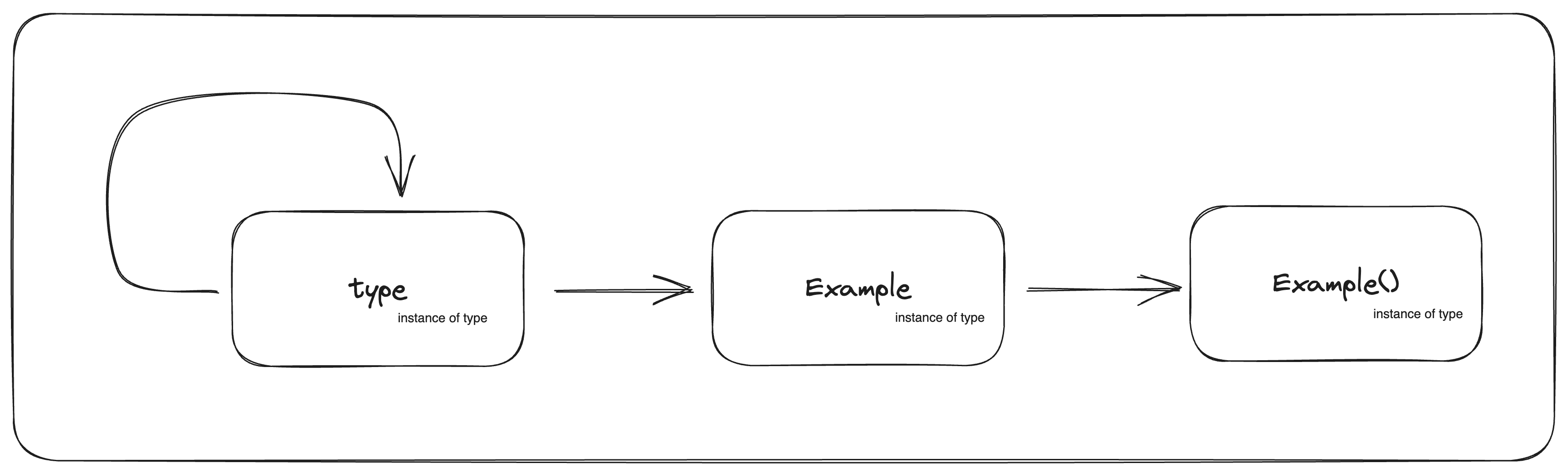
assert isinstance(Example, type)
assert isinstance(Example(), Example)The Three Arguments
In the type(name, bases, namespace) call:
name— the name of the class (written to the__name__attribute).bases— a tuple of inherited classes; an empty tuple means deriving fromobject.namespace— a dictionary containing all assignments in the class body: attributes, methods,__module__,__qualname__, etc.
Why Does This Matter?
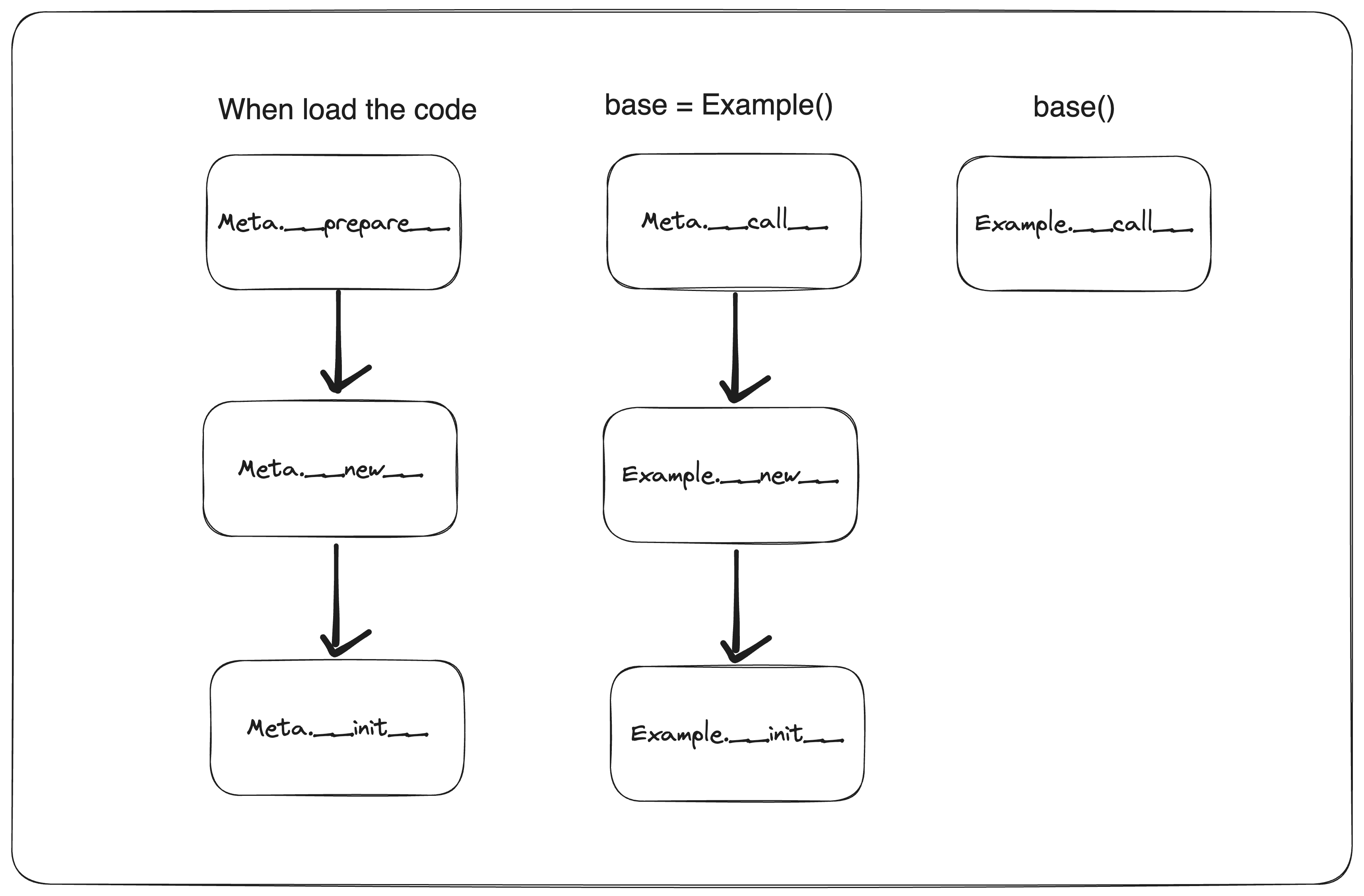
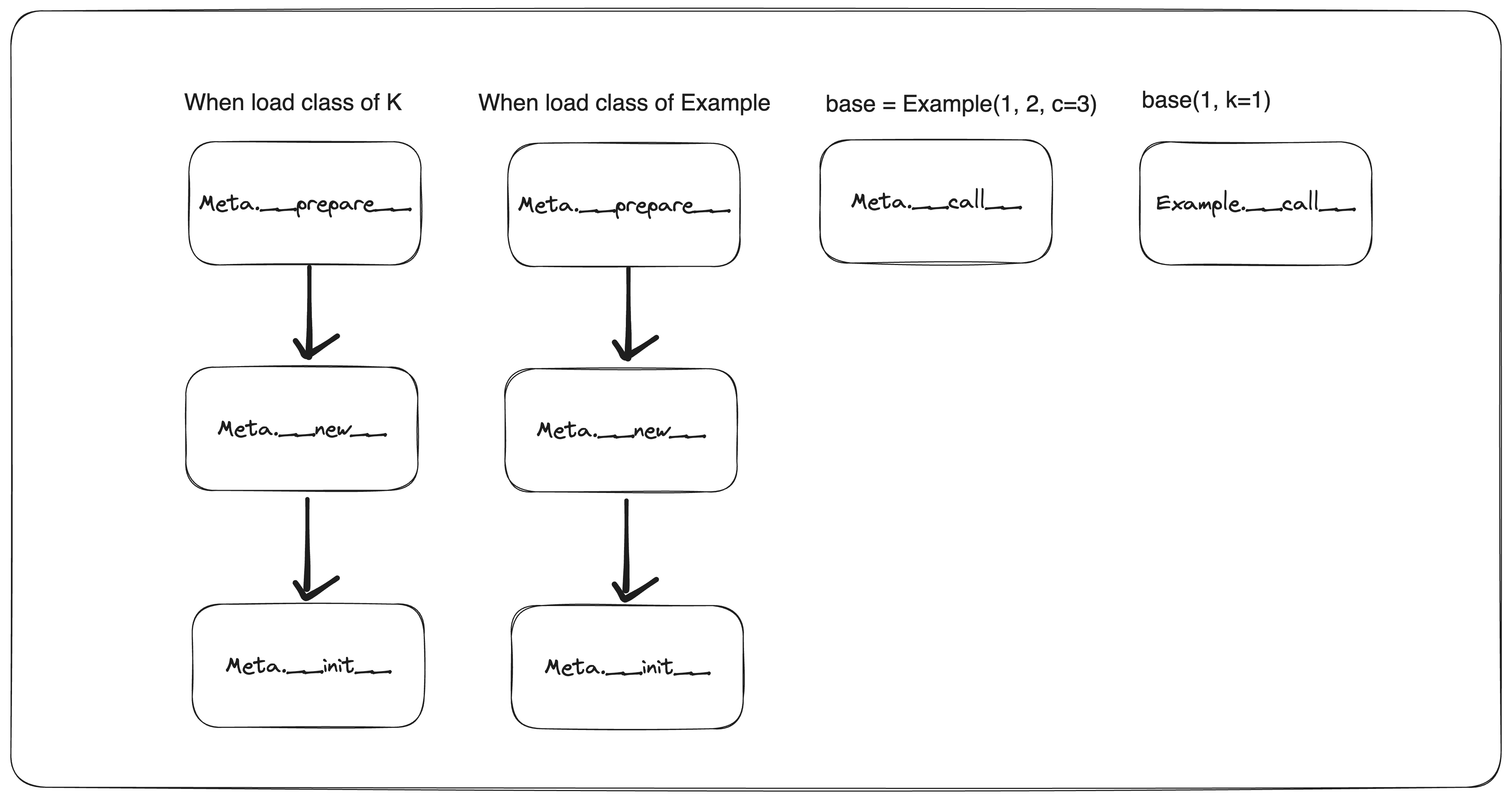
Dynamic class creation is useful when you need to determine class names or attributes at runtime — for example, when an ORM generates table definitions from code, or when a plugin system registers plugins. This is also the first step to understanding metaclasses: a metaclass is a class that takes the place of type and controls this type(name, bases, namespace) call.